
Tel: +39 071 0987886 Mobile(24/7): +39 347 5960737 e-mail: info@secomar.net
Ultrasonic Hatch Cover Testing
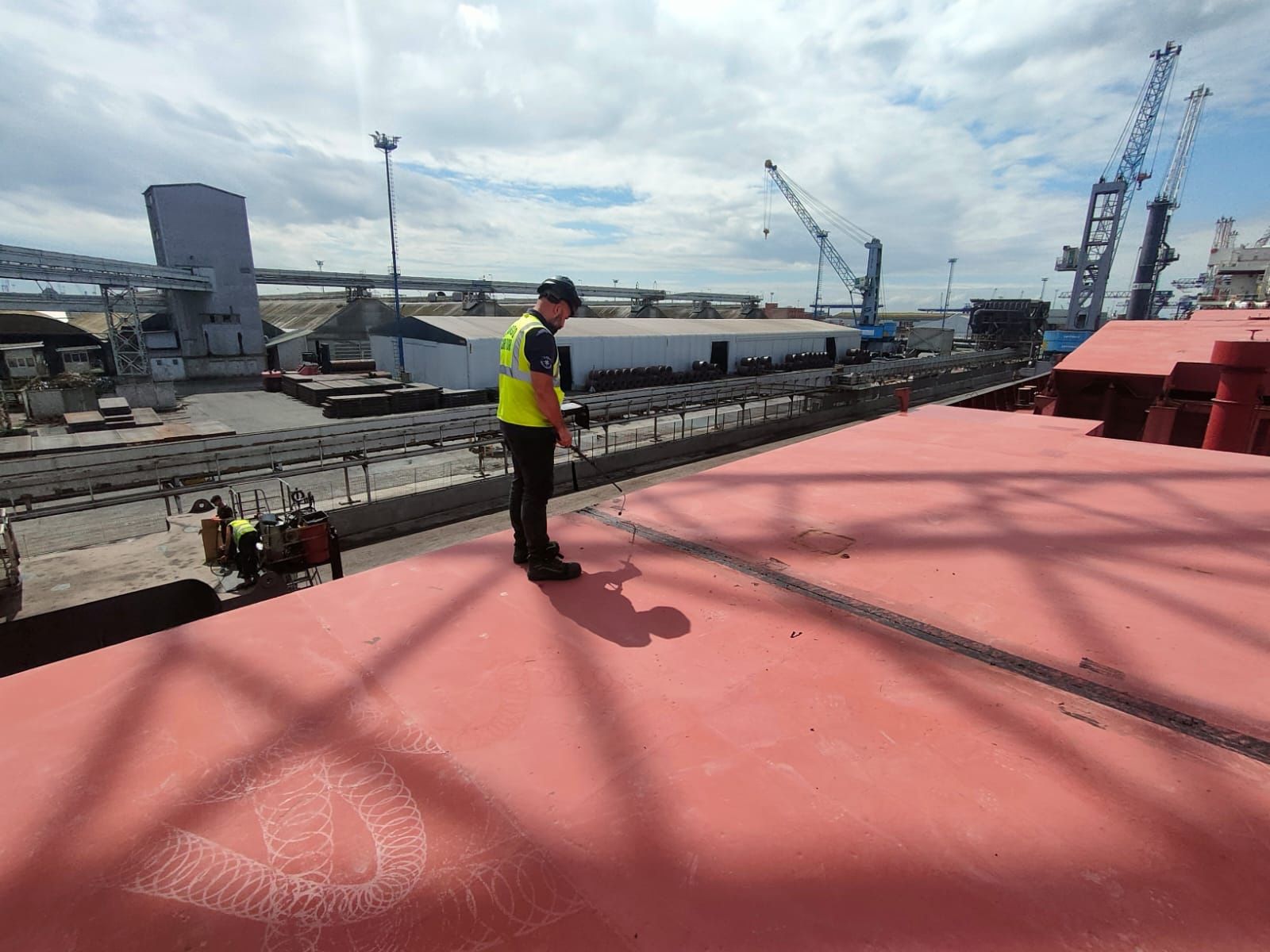

Ultrasonic hatch cover testing is a non-invasive method that uses high-frequency sound waves to detect leaks in a ship’s cargo hatch covers. A transmitter is placed inside the hold to emit ultrasound, which is then picked up outside by a receiver if any gaps or leaks exist in the sealing system.This technique quickly and accurately identifies leaks, helping to prevent water ingress that could damage cargo and jeopardize ship safety.
Why is the ultrasonic method preferred over traditional hose testing?
Ultrasonic testing is non-invasive, cleaner, and significantly more accurate than the traditional hose test. It precisely pinpoints the exact location and severity of the leak (measured in decibels), whereas hose testing can miss small leaks and introduces water into the hold, which risks damaging cargo. The test can also be performed in almost any weather condition.
How does the equipment determine the severity of a leak?
The test utilizes a high-frequency sound signal that cannot be heard by the human ear. The receiver outside the hold measures the signal leakage strength in decibels (dB). Based on industry standards, the dB reading translates directly to the integrity of the seal, allowing the surveyor to quantify the severity of the leak and recommend necessary repairs.
When should hatch covers be tested?
Hatch covers should be tested routinely as part of a vessel’s planned maintenance, typically every six months, or prior to loading weather-sensitive cargo. It is also mandatory to test them after any repairs, maintenance, or replacement of rubber packings or steel components to confirm the seals are completely weathertight before departure.